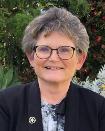
I am a forensic genealogist who has helped solve some of the most challenging cold cases using DNA.
I was always fascinated by my family history and wanted to learn more about my ancestors. I started doing genealogy research when I was a teenager and discovered that I had relatives from Ireland, Germany, and Poland. I also found out that I had a distant cousin who was a famous opera singer. I was amazed by the power of DNA to connect people across time and space.
I came from hardworking, smart people, but I really came from nowhere. My dad was a florist; my mom was president of the mothers’ club, and they had three kids to raise besides me. My parents wanted their kids to succeed but didn’t know what to do about me.
Going to an all-girls Catholic school where science was not emphasized, I nurtured my hunger for archaeology, astronomy and other sciences through different channels, including a National Science Foundation-sponsored summer program in Baton Rouge, Louisiana. I won countless science awards growing up and was handed a box of trophies at my senior awards ceremony. When they announced the science award, I stood up before they said my name.
Then a telegram arrived, addressed to Fitzpatrick, that would change my life. It said, ‘Congratulations, you won one of 10 top national prizes in the Tomorrow Scientists and Engineers Competition sponsored by Humble Oil. And your prize is a scholarship to the college of your choice. The $6,000 prize would not even pay for books these days, but that covered Rice tuition for four years.
I decided to pursue a career in physics and became a successful optical engineer. I worked on projects involving lasers, satellites, and space exploration. I enjoyed my job, but never lost my interest in genealogy. I continued to do DNA testing and joined online databases to find more matches. I also learned how to use genetic genealogy tools to analyze DNA data and build family trees.
After graduating from Rice with a B.A. in physics, I went on to earn a master’s degree and Ph.D. in nuclear physics from Duke University. In 1989, I founded Rice Systems (named for my mother, the former Marilyn Rose Rice) in her garage.
It was an optics company that specialized in high-resolution laser measurement techniques for the National Science Foundation, NASA and the Department of Defense. My company moved to an office complex in Irvine, California, and employed a host of scientists and contractors before closing in 2005. As a small, woman-owned business, it was hard to survive in the business and political environment at that time.
As this company was winding down, I found a welcome distraction in writing a book that combined my love for genealogical research with my background in the sciences.
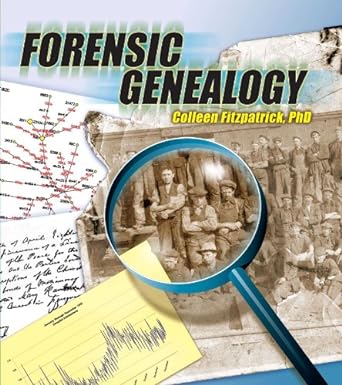
The weekend that my business was liquidating its office furniture, I attended my first genealogy conference in Portland, Maine, with my book in tow. I shared a table with a DNA company we were working with, and I couldn’t stop selling books. This was the start of a whole new career. Over the “Forensic Genealogy” has sold over 20,000 copies.
One day, I received an email from a detective who was working on a cold case involving an unidentified child who was found murdered in 1957. The detective had obtained a DNA sample from the child's remains and asked me if I could help identify him.
I agreed to take on the challenge and used my skills and resources to trace the child's ancestry. I was able to find living relatives of the child and confirm his identity as John "Johnny" Doe.
Working out of my home in Fountain Valley, California, I spend my days tracking cases, sending DNA off for lab work, shepherding cases through the system, talking to the media and even doing a bit of genealogy myself.
Since 2010, my for-profit enterprise, Identifinders International, has worked roughly 120 cold cases, helping to solve “about a dozen,” she says. “I hand leads to the detectives working the case, and they have to run with those leads.”
At any moment the phone might ring, adding to my caseload. “Somebody might call and say, "We found another woman in the ditch who has been strangled. We only have her hands and her torso. Can you do anything?”
I also helped the detective find the killer, who was still alive and confessed to the crime. Over the last 2 1/2 years, the project has solved 14 Doe cases — 10 Janes and four Johns — through the collective efforts of more than 80 volunteers using advances in DNA technology and an ever-expanding online DNA database to solve previously unsolvable mysteries, many of which date back decades.
I was thrilled by the outcome and realized that I had found her true calling. I decided to dedicate my life to forensic genealogy and founded my own company, Identifinders International.
I have since helped solve many other cold cases, such as the Golden State Killer, the Bear Brook murders, and the Buckskin Girl. I have also helped reunite adoptees with their biological families and identify victims of mass disasters and wars.
Identifinders has tackled a wide scope of cases, from Baby Does and Holocaust survivors to murder suspects and military IDs.
In 2008, working with the Armed Forces DNA Identification Laboratory, I was a member of the team that identified the remains of the “Unknown Child on the Titanic” as Sidney Leslie Goodwin, a 19-month-old English boy. Though my partner, Andrew passed away in 2016, my work with Identifinders still occupies about half of my research time.