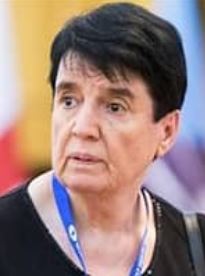
I was born in the small town of Zugdidi in western Georgia. When I was about 5 or 6 years old, I had four older brothers and I followed them everywhere. All the children from the neighbourhood gathered in our house. We were really connected and did a lot of things together. We made an improvised table for table tennis, we loved to play billiards, and football...they placed me, a girl, as the goalkeeper. We really enjoyed playing chess as well.
There were two important moments that led to my subsequent more serious pursuit of a chess career. My older brother was the best chess player in our town, Zugdidi. He also took part in a Georgian championship. I learned to play chess by watching him play.
The second and very important moment was when I was about 11 or 12 years old, and I travelled to the Georgian capital, Tbilisi. At that time, my older brother was chosen to play in the team championship but he had to cancel at the last moment.
They had heard that my brother had a younger sister who also played chess, so they chose me to play, as they also needed a girl. While we were travelling to the competition by train, I played some games against the other team members, and in the end, I won even against our first board. We finished fifth in the competition, which was a great achievement at the time for a small town like Zugdidi.
I played well and one of Georgia’s most important trainers and the father of the Georgian women's school of chess, noticed my play.
Not long afterwards he called and asked my parents to let me come to Tbilisi, where I could get some proper training. My parents finally agreed and I started training in 1954.
The following year I was already practically winning all the tournaments, and in 1956 I won the semi-final of Women’s Soviet Union Championship.
At that time, this was considered a tremendous achievement for a 14-year-old girl. And this is how my long and successful chess path began.
What a career it was! Being a female chess player in a male-dominated field was never easy. But I refused to let gender stereotypes define me. With persistence and hard work, I reached the top
I was a five-time Women's World Champion; undefeated from 1962 until 1978, when a fellow Georgian, then 17-year-old Maia Chiburdanidze forced me to proudly pass on my role of champion.
I am a proud winner of eleven Olympic gold medals. Most amazing is that I was honoured to be the first woman to receive the title of chess Grandmaster after achieving many remarkable successes in the mid-70s.
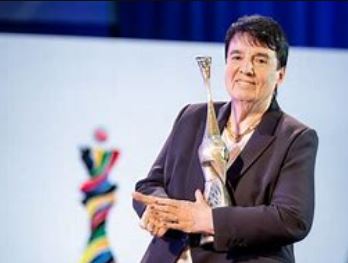
When I was 60 years old, I published a book which contains my best games. The book is divided into three parts: short games, games against men and games against women. The only game in the book that ended with a draw was the one against legendary Serbian grandmaster Drasko Velimirovic. The game was even chosen as the most beautiful game of the year by the Chess Informant.
During the time of the Soviet Union, I was a member of the Georgian Parliament multiple times. A few years ago I was also an active participant of the protests against the former Georgian president Saakashvili, where 140 people ended up being killed, but the western media failed to report it.
The world is poorly informed about his and his team’s criminal activities. I have grandchildren and I wish for them to live in a normal country. Sadly, the positions of government continue to be occupied by criminals, who enjoy the protection of selected western countries and international organisations. I was also a supporter of the revolution against the former President Shevarnadze in 2002, after which Saakashvili became the President. Sadly, after that, development took a catastrophic turn.
My most important position was the function of Olympic Committee’s President between 1989 and 1996. Even though the economic position was poor at the time in Georgia, I decided to run for President and ended up being elected. I am extremely proud of this period in my life. Despite the poor economic situation, we were very successful at the Olympic Games and World Championships.
As a former sportswoman, I wanted for sports to be fair and clean. However, I was faced with many irregularities. I am very thankful that chess was my sport of choice, as the arbiters there do not have much influence on the game itself. I admire other sportsmen and sportswomen, who are many times faced with corrupt decisions by the referees and are forced to accept them and still find the strength to continue on their path.
In 2022 I sued Netflix in September for "false light invasion of privacy" and defamation after a line in the hit series The Queen's Gambit falsely stated that I "never faced men" at the chessboard. In reality, I had faced many men in my career, from the very beginning.
Netflix wanted to have the suit dismissed, arguing that the series is a work of fiction. However, U.S. District Judge disagreed and noted that Gaprindashvili had made a plausible argument that she was defamed in the production and made the point that works of fiction are not immune from defamation suits if they disparage real people.
Netflix also claimed that, even if believed, the line that says I "never faced men" is not defamatory. The company argued that for reasonable viewers of the series this line would not carry an implication of my inferiority but merely showcase the structural barriers that impeded women's advancement in elite chess in the 1960s. The judge disagreed here as well and said the average viewer could easily see the line as disparaging.
I felt strongly I needed to make this stand and am happy to say I was very successful in doing so. Checkmate!